Complete Guide: To Understand the One Piece Card Game
Perrine L · January 28, 2026
1) What exactly is OPCG (in its collector's edition)?
OPCG works by extensions (called "sets"): OP-01, OP-02, OP-05, etc.
Mini guide to codes:
- OP = main expansion (booster set)
- ST = Starter Deck (ready-to-play deck)
- EB = Extra Booster (special set / limited edition)
Set OP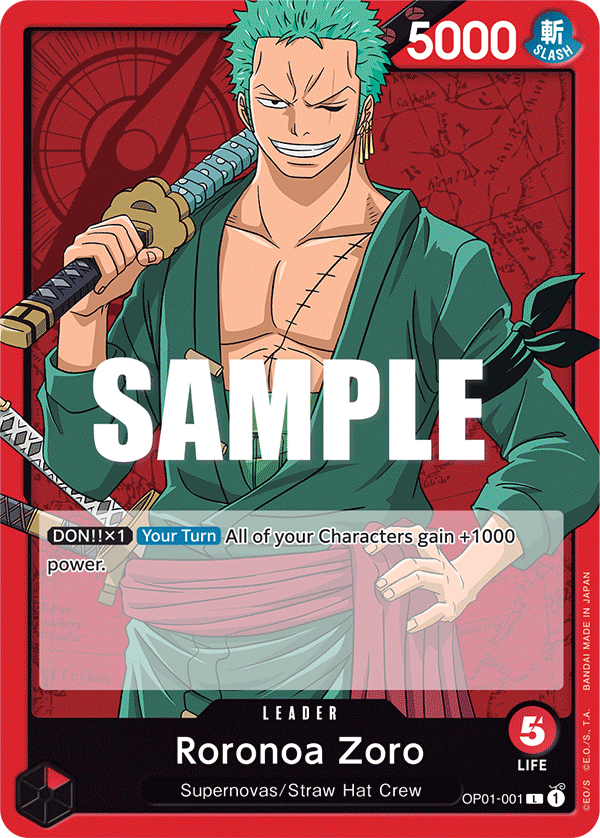
Zoro (OP-01)
Set ST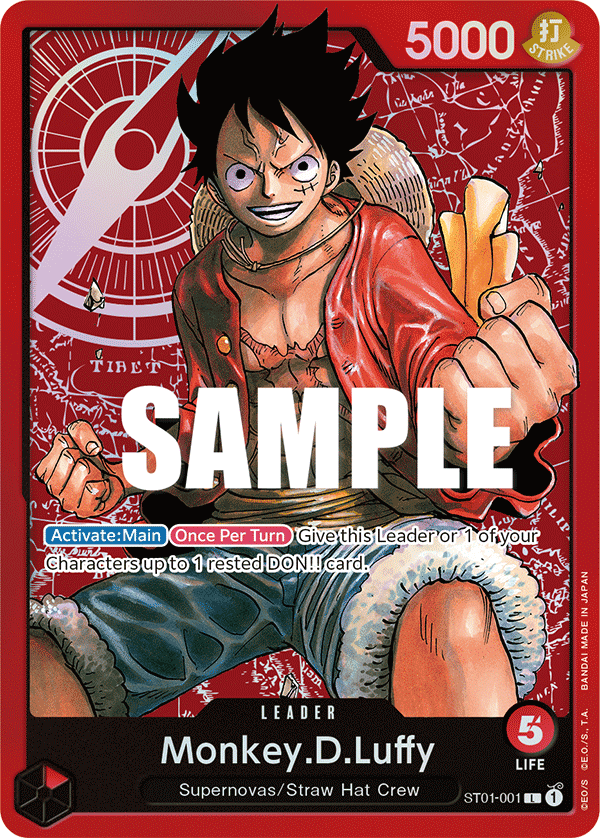
Luffy (ST-01)
Each set has an official list that indicates:
- the total number of cards in the set
- the available rarities
- the existence (or not) of alternative (parallel) versions
- special categories (e.g., SP, Super Parallel)
The most sought-after card in a set isn't necessarily an "SR" or a "SEC". Often, it's the parallel versions (different art, premium finish) and, in some sets, the cards nicknamed "Manga" by the community.
2) The products: what you actually buy
The products (packs, boxes, decks) are not all released at the same time. We summarize everything in the One Piece Card Game release calendar .
When you buy One Piece, you are not buying "a card", you are buying a lottery ticket (except in exceptional circumstances).
A) Booster pack (1 pack)
In the Japanese version, a pack usually contains 6 cards. This is the cheapest option per card, but also the most random.
- Get it if: you want the pleasure of opening it, you're testing a set without a big budget.
- Avoid if: you are aiming for a specific card (it's better to buy the card individually).
B) Booster box / Display (1 box)
A box/display = a set of sealed packs. This is often more cost-effective than buying packs individually.
A key point for collectors: some sets have a bonus box (box topper). Examples (JPN):
• OP-01: 1 random "bonus" parallel card out of 6
• OP-02: same logic
So when you buy a sealed OP-01/OP-02 box, you know that there is at least 1 parallel via the topper, even if the rest remains random.
C) Cardboard box / "box"
One box = several sealed boxes. This is especially useful if you want to:
- open up in volume to "smooth out" randomness
- increase your chances on very rare items (statistically, not guaranteed)
D) Starter Deck (ready-to-play deck)
Fixed contents (no randomness). Also note: some Starter Decks sometimes include a booster pack, but this is not always the case and depends on the product (and sometimes the region).
Ideal if you want:
- guaranteed cards
- a simple, no-fuss product
- a collection base centered on a theme/character
Bonus: Dash Packs
Some stores offer Dash Packs: these are promotional mini-packs given away with each purchase of a display box (usually during a set release or store promotion, and while supplies last). They aren't "normal" booster packs, but promotional items, and their value depends on the cards included.
Box Topper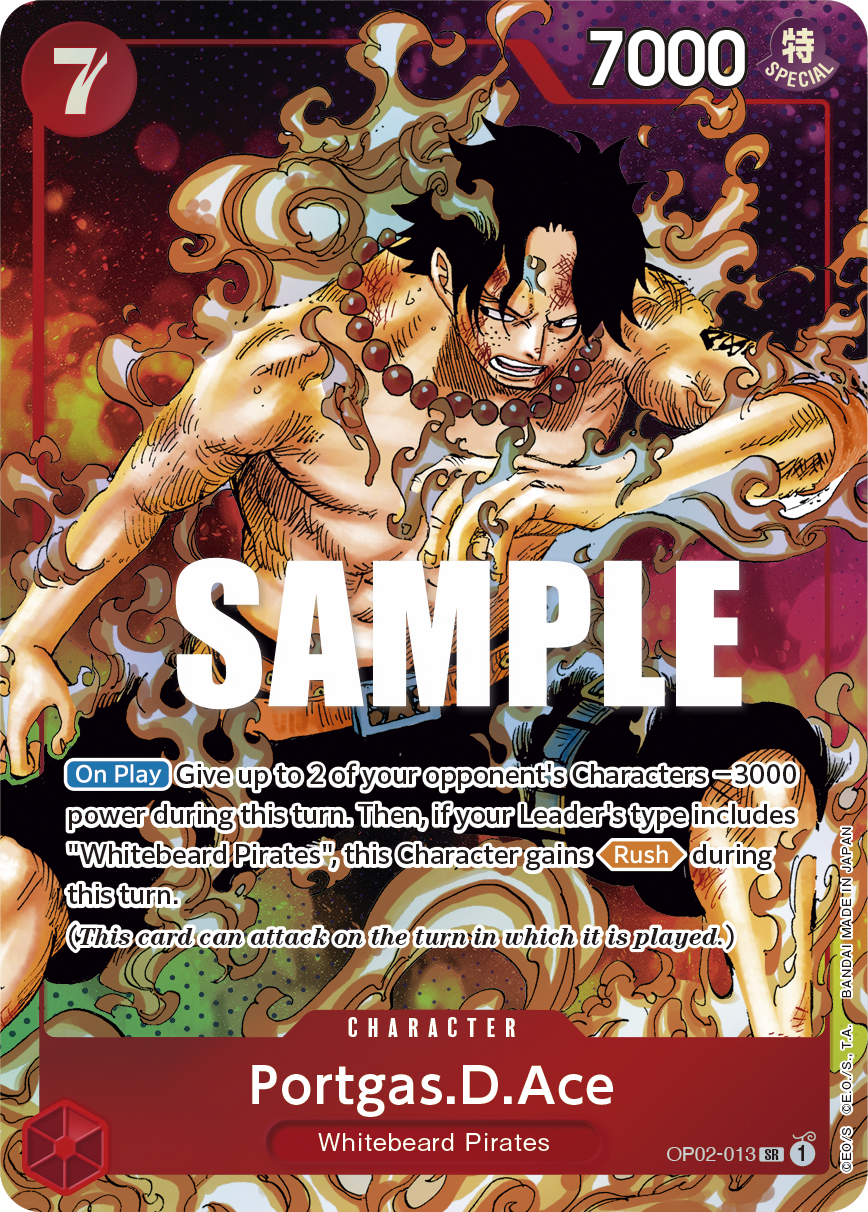
Ace (Box Topper)
Starter Deck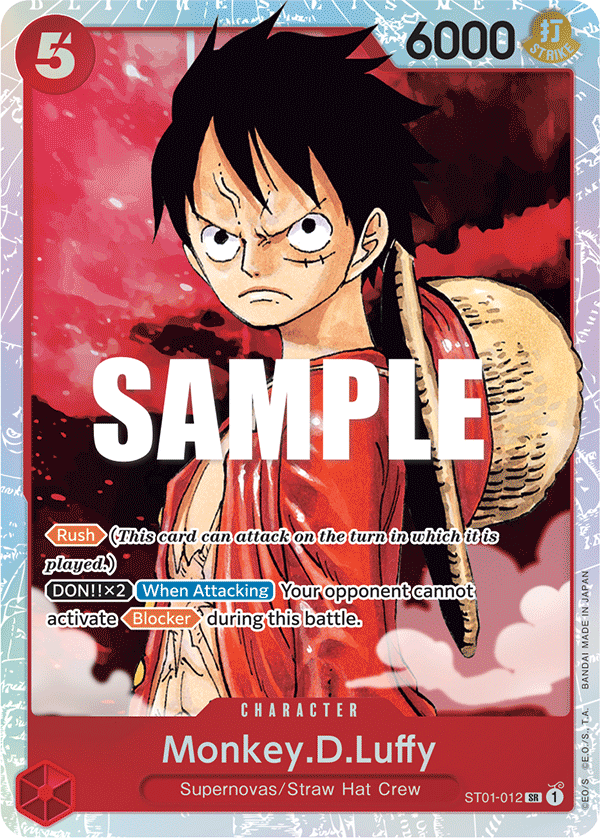
Luffy (Starter)
3) Types of cards
(to understand a checklist or an announcement)
Even if you don't play, understanding the categories helps a lot:
Leader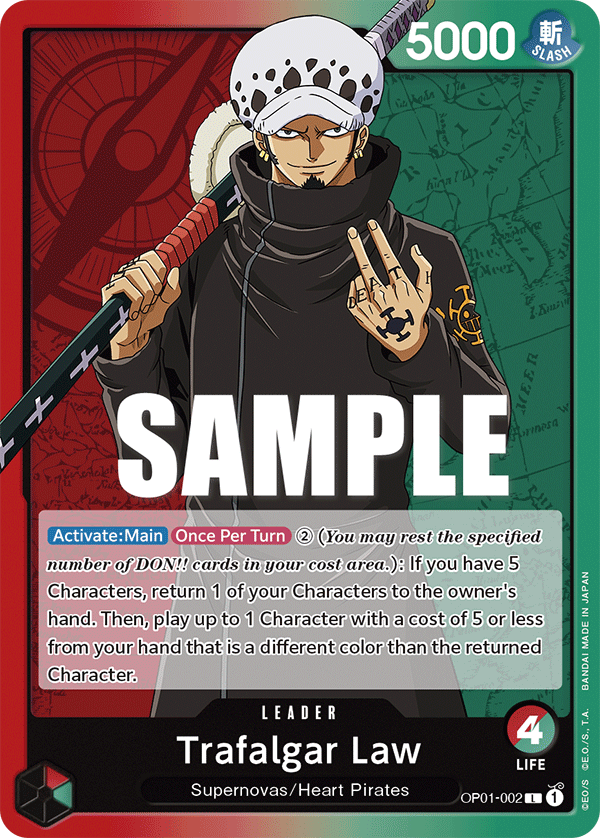
Law (Leader)
Character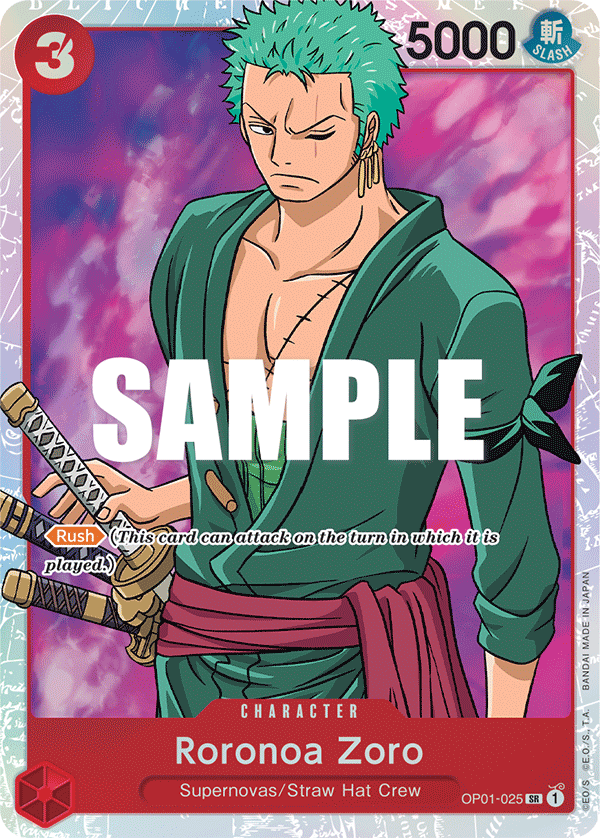
Zoro (Character)
Event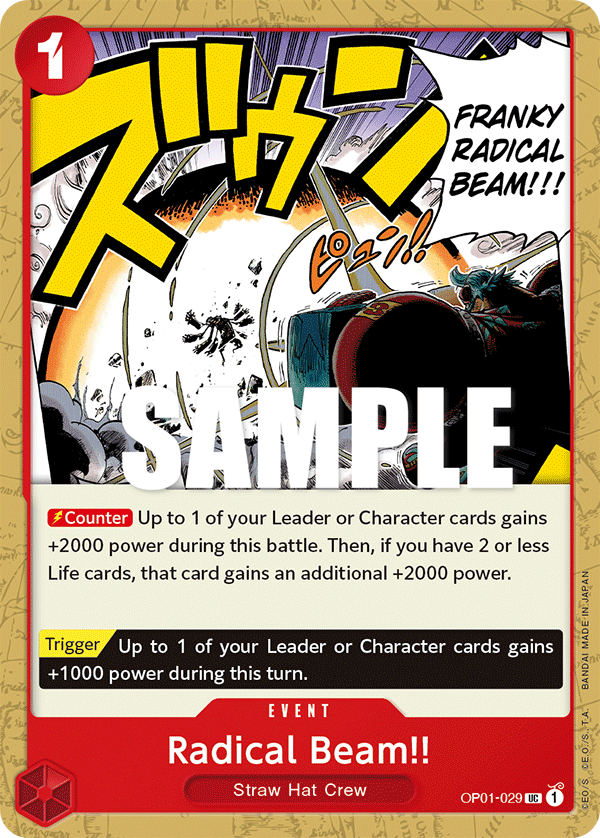
Radical Beam (Event)
Stage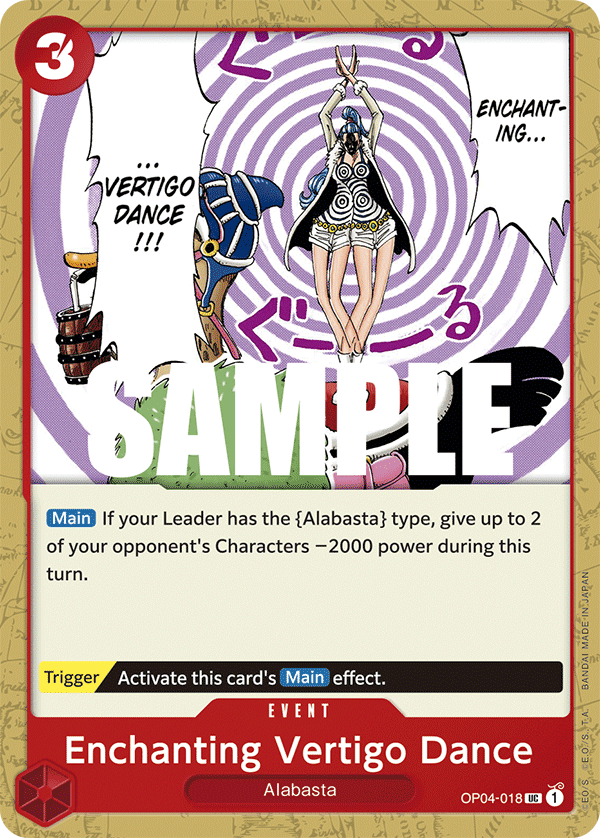
Onigashima (Stage)
- Leader (L): "leader" of the deck, highly sought after in parallel
- Character: the majority of the cards (characters)
- Event: one-off actions/effects
- Stage: locations / lasting effects
- GIFT!!: Energy cards, sometimes listed separately depending on the set (and often collected in stylish versions)
4) The colors (useful even in a collection)
The cards have a color (red, green, blue, purple, black, yellow...). Even if you don't play, it's useful for:
- organize your binder
- filter a search
- faster identification of a card in an advertisement photo
Rouge
Luffy (Rouge)
Vert
Kid (Vert)
Violet
Kaido (Violet)
Bleu
Crocodile (Bleu)
5) Rarities and premium versions
1. Rarities (standard boosters)
A) The "classic" rarities
You will often see:
- C (Common)
- UC (Uncommon)
- R (Rare)
- L (Leader)
- SR (Super Rare)
- SEC (Secret Rare)
Common
Chopper (Commune)
Super Rare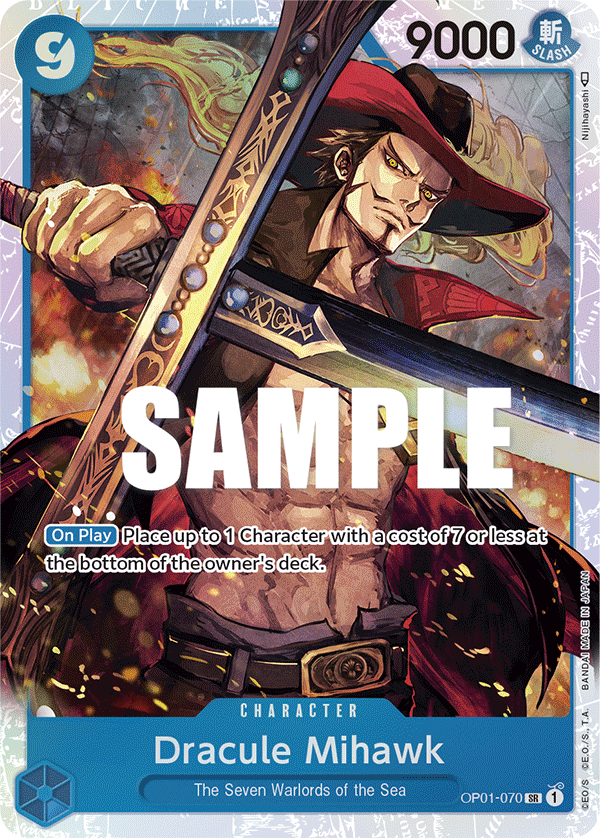
Mihawk (SR)
Secret Rare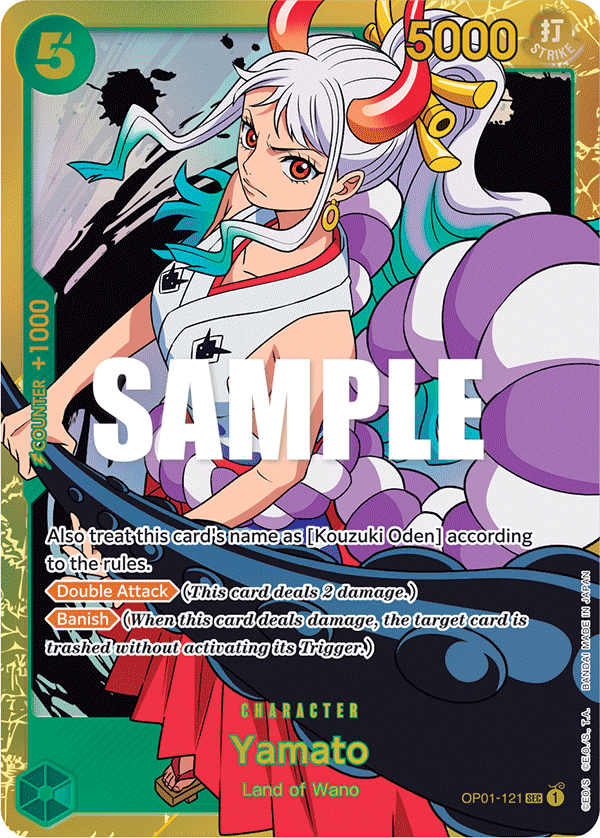
Yamato (SEC)
B) The "Parallels"
A parallel version is an alternative version: different art, premium finish, textured. This is often what collectors "hunt" for, because:
- more desirable
- rarer
- more expensive on the secondary market
C) The SPs (Special Cards)
Depending on the set, Bandai lists SP Cards as a special category. They are generally highly sought after because they feature "premium + popular characters".
D) The "Rare Manga" (the term you see everywhere)
The term "Manga Rare" is primarily a community nickname. On the official Japanese side, you'll see it more often as: Super Parallel .
Within the community, these Super Parallels are called "manga/comic backgrounds" (hence "Manga"). Simply remember:
- Base: C / UC / R / SR / SEC / L
- Premium: Parallels, SP, TR
- Very premium: Super Parallel (often called "Manga")
Super Parallel
Shanks MANGA
2. Ultra collector (excluding standard boosters)
A) Serial (or "Serialized")
These are numbered cards (e.g., 0123/2000). They are produced in limited quantities, often for very premium cards. They are an ultra-rare collector's item.
B) Flagship (Flagship Battle promos)
"Flagship" refers to promotional cards distributed during Flagship Battle tournaments (official events). It's not a set rarity, but rather an event-specific promotion. Their value depends on the character's popularity, the quantity distributed, their playability, and their condition. They are often highly sought after due to limited access (you have to participate or win).
C) Championship (Championship / Regionals promotions)
Promotional cards are linked to larger competitions (championships, regionals, etc.). They can exist in several levels (participation, top, winner). The higher the level, the rarer and more expensive the card. These are often "prestige" items (from the competitive scene collection).
D) Trophy (or "Trophy")
"Trophy cards" are the rarest rewards: generally awarded for top finish/winner at major events. Print runs are extremely limited and the market very restricted (few copies in circulation). They are often considered the pinnacle of OPCG collecting, surpassing manga in terms of sheer rarity.
Promo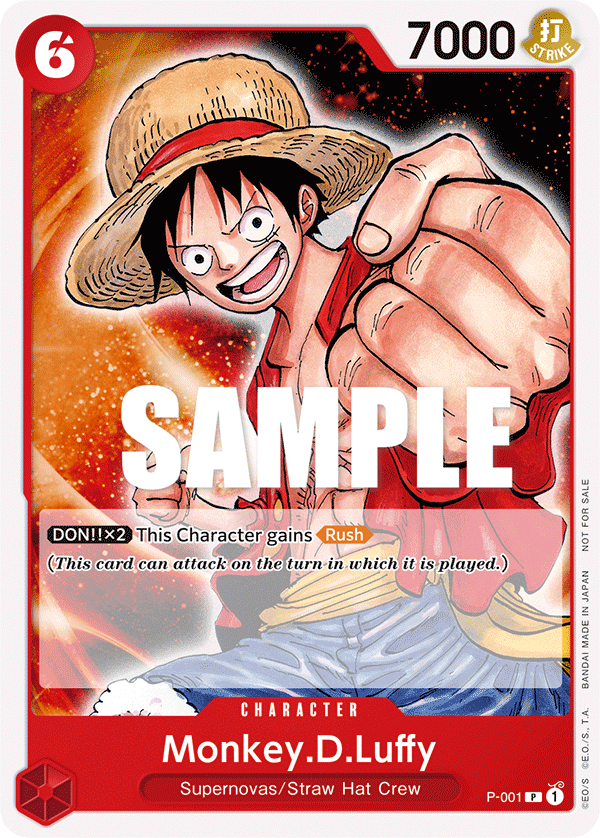
Luffy (Promo)
Promo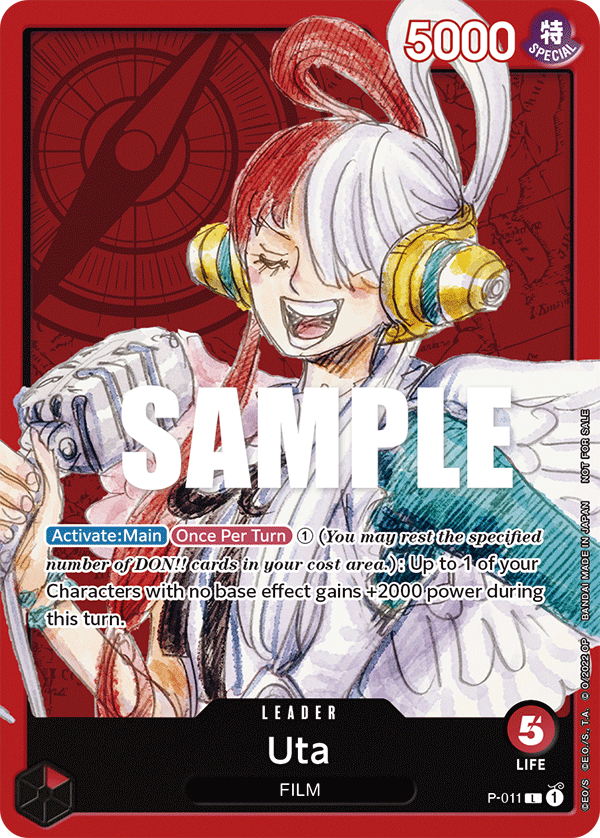
Uta (Film)
6) Pull rates: what is guaranteed vs. what is "observed"
What is guaranteed (when it is advertised)
Ex: on some JPN sets like OP-01/OP-02, the box topper guarantees 1 parallel card from a small pool.
This is not guaranteed
Aside from these clearly announced bonuses, the contents of the packs remain 100% random. Therefore, the "ratios" (how many SR, SEC, etc. per box) are primarily trends observed by the community, not an official agreement.
God Packs (very rare)
There are also God Packs: "exceptional" packs where the composition differs from a normal pack. Instead of a classic mix of common/rare cards, you might find a pack with many more premium cards than usual (for example, several cards in alternate/foil versions in the same pack). This is extremely rare and never guaranteed.